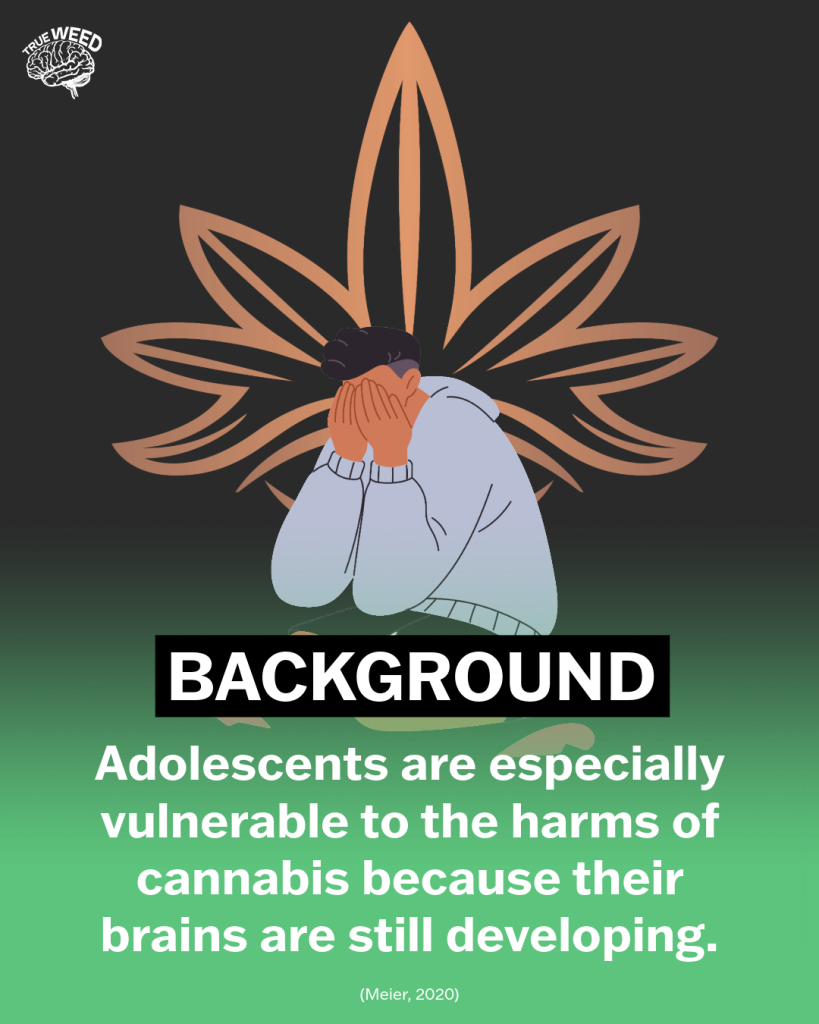
Rationale: Cannabis affects mood and mental health, with effects building up over time. Adolescents are particularly vulnerable to these harms, yet the relationship between cannabis use, depression, and anxiety has remained unclear. Understanding this connection is critical because cannabis prevalence increases during teenage years, an age range that overlaps with peak rates of depression.
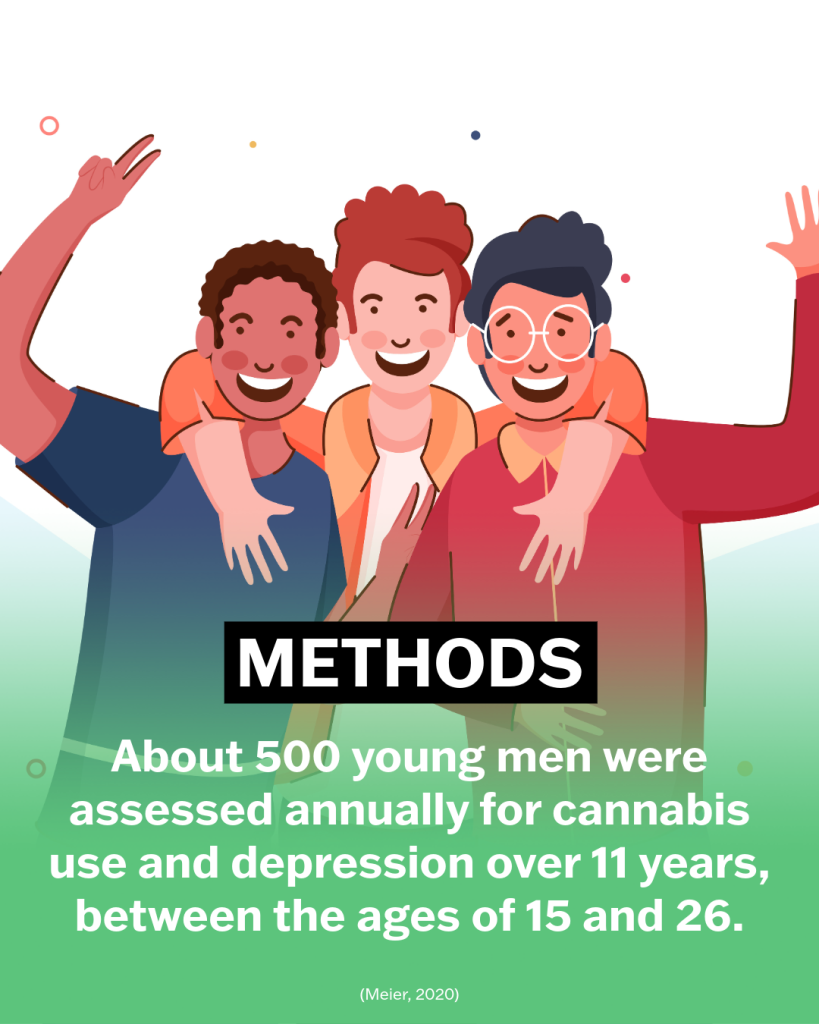
Method: A study followed 506 young men annually across an 11-year span (from ages 15 to 26) to assess cannabis use alongside depression and anxiety symptoms over time.
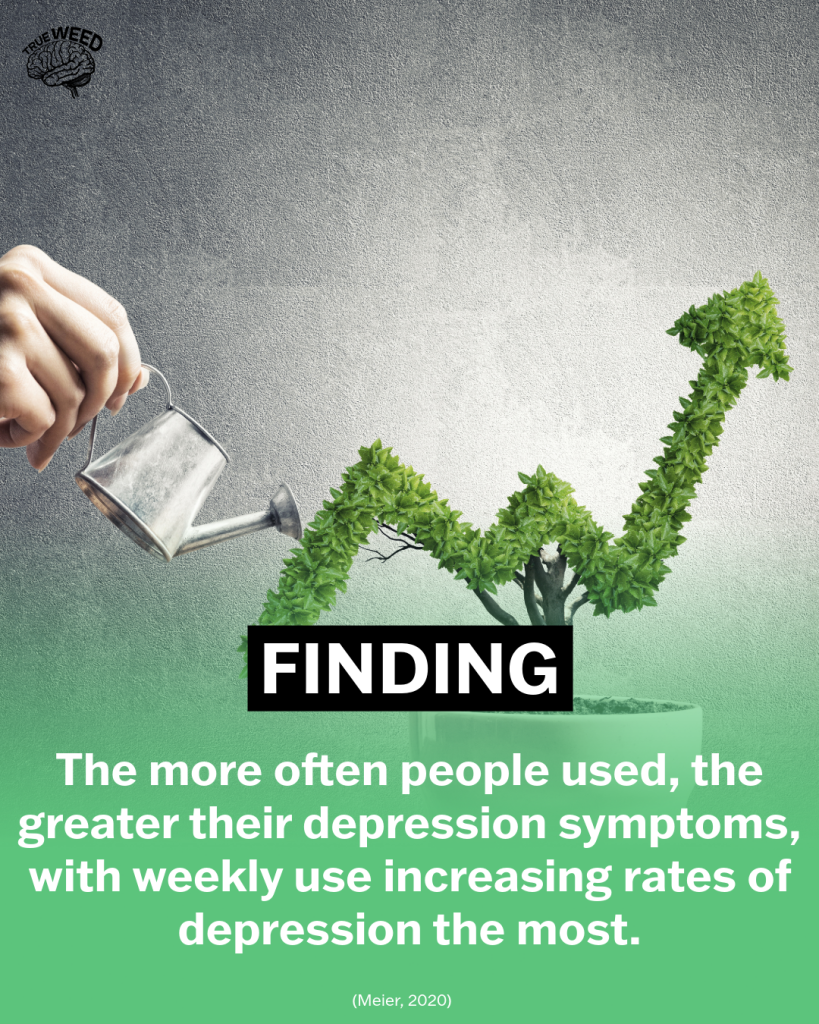
Results: Initiating cannabis use (moving from no use to some use) was linked to a 5.2% increase in depression symptoms. Higher frequency of use corresponded to greater depression symptoms as weekly or more usage resulted in an nearly 6% increase in depression symptoms, whereas less than weekly usage yielded 3.4% anxiety and depression problems. Long-term, cumulative cannabis use was found to be more influential than recent use.
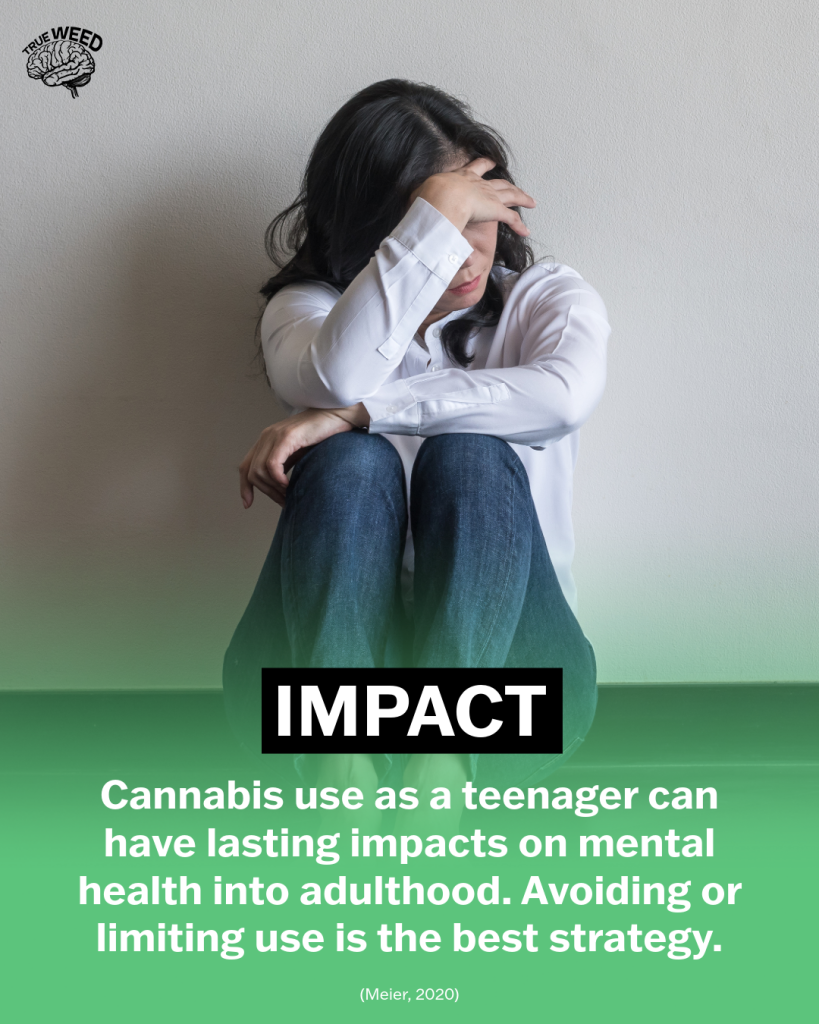
Meaning: Increased cannabis use over time is directly linked to increased depression and anxiety problems in young men, with long-term exposure and earlier onset posing the highest risk.
Meier, Madeline H., et al. “Associations between Recent and Cumulative Cannabis Use and Internalizing Problems in Boys from Adolescence to Young Adulthood.”
Cannabis Use in Adolescence: Vulnerability to Cognitive and Psychological Effects. Biological Psychiatry Global Open Science, 3(2), 167–168.
Learn More
- Does the music I listen to impact my weed habit?
- How does weed impact processing emotions?

- Is music actually better when you’re high?

- How are teenage cannabis use and adult depression connected?
- Exploring the ties between adolescent cannabis use and adult mental health
- Is weed a gateway drug? Does smoking weed lead to other drug use?