Rationale: In 2016, about 7% of US women reported using cannabis during pregnancy, and since widespread legalization, odds are this percentage has increased. The chemicals in cannabis readily cross the placenta, where they might have negative effects on development. Disturbances in prenatal development may increase the risk of premature birth, one of the most important indicators of fetal and newborn health. This study explores the association between cannabis use in mothers and harmful health outcomes for children.
Method: 661,617 women who were at least 15 years old self-reported their drug use during pregnancy. Researchers then matched drug users and non-users based on similarities to assess the impact of drug use on prenatal development. Overall health of the baby and pregnancy duration were evaluated.
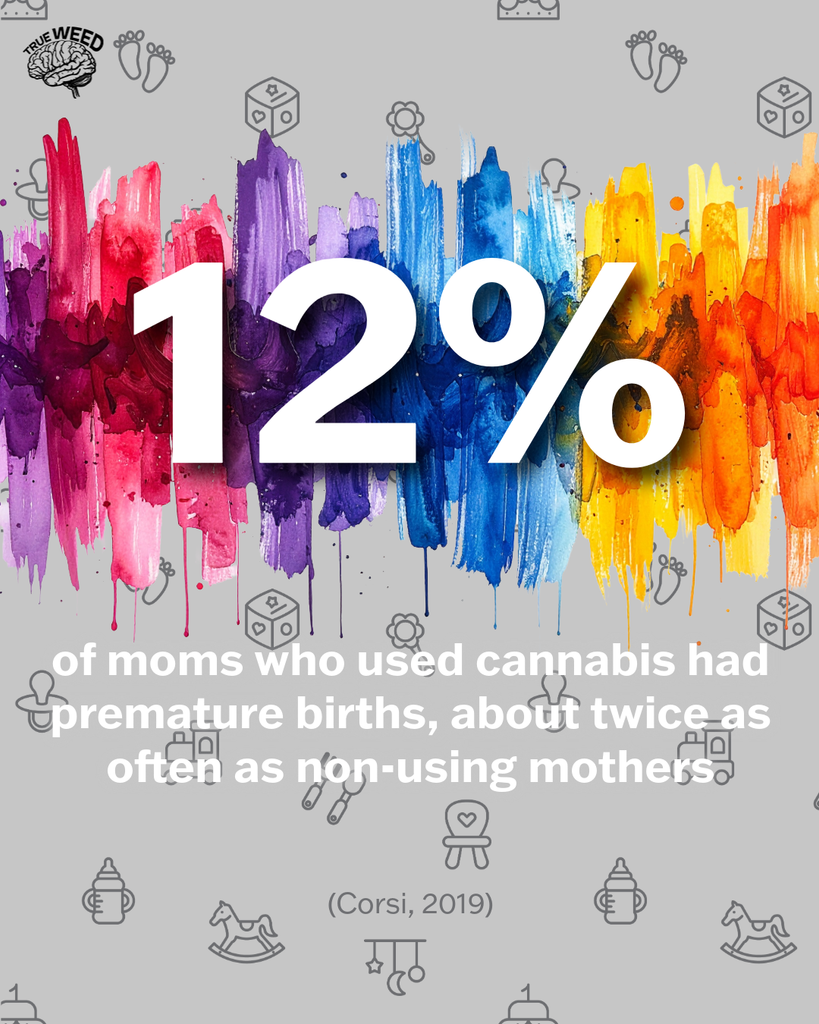
Results: 12% of users had a premature birth. 6.1% of non-users reported premature births. Mothers who used cannabis were twice as likely to give birth prematurely. Babies from non-using mothers were healthier in terms of heart rate, respiration, skin color, muscle tone, and reflexes. Newborns of cannabis users were more likely to be transferred to an intensive care unit.
Meaning: Cannabis use during pregnancy increases the likelihood of a premature birth. The kids born to cannabis using mothers were also less healthy overall and more likely to need intensive care. Cannabis exposure during prenatal development does not appear to be safe.
Blencowe, H., Lawn, J., Vazquez, T. et al. (2013). Preterm-associated visual impairment and estimates of retinopathy of prematurity at regional and global levels for 2010. Pediatr Res 74 (Suppl 1), 35–49. https://doi.org/10.1038/pr.2013.205
Corsi, D. J., Walsh, L., Weiss, D., Guo, Y., Gladstein, R., Shaw, G. M., & Walker, M. (2019). Association between self-reported prenatal cannabis use and maternal, perinatal, and neonatal outcomes. JAMA, 322(2), 145–152.
Noor, M. S., Elbarbary, M., Embabi, S. N., Zaki, M. A., Awad, H., & Al-Feky, M. (2022). Screening and Risk Factors for Retinopathy of Prematurity in a Tertiary Care Hospital in Cairo, Egypt. Clinical Ophthalmology (Auckland, N.Z.), 16, 3257–3267. https://doi.org/10.2147/OPTH.S383493
Özek, E., & Kersin, S. G. (2020). Intraventricular hemorrhage in preterm babies. Türk Pediatri Arşivi, 55(3), 215–221. https://doi.org/10.14744/TurkPediatriArs.2020.66742
Richardson, K. A., Hester, A. K., & McLemore, G. L. (2016). Prenatal cannabis exposure—The “first hit” to the endocannabinoid system. Neurotoxicology and Teratology, 58, 5–14. https://doi.org/10.1016/j.ntt.2016.08.003
Young-Wolff, K. C., Tucker, L. Y., Alexeeff, S., Armstrong, M. A., Conway, A., Weisner, C., & Goler, N. (2017). Trends in Self-reported and Biochemically Tested Marijuana Use Among Pregnant Females in California From 2009-2016. JAMA, 318(24), 2490–2491. https://doi.org/10.1001/jama.2017.17225

Learn More
- Is weed a gateway drug? Does smoking weed lead to other drug use?

- Can smoking weed lead to a stroke?
- Lasting impacts of cannabis use among youth

- Association between cannabis use and maternal outcomes
- High-intensity exercise and cannabis cravings

- Doctor-recommended cannabis use in the era of legalization