
Rationale: Cannabis is widely used, with about 10–30% of regular users develop cannabis use disorder (CUD), a condition associated with problems involving memory, mood, anxiety, and motivation. Research has also linked CUD with changes to the hippocampus, a part of the brain that plays an important role in learning, memory, and emotional processing.
Cardiovascular exercise, particularly high-intensity interval training (HIIT), can stimulate processes involved in brain growth and connectivity. Previous research has also suggested that HIIT can improve hippocampal structure and function.
An exercise routine that could help counter some of the brain-related effects associated with CUD would be an important treatment tool. But researchers didn’t know whether HIIT could actually improve hippocampal health in people with CUD.
Scientists wanted to know: could 12 weeks of high-intensity exercise improve the health of the hippocampus in people with cannabis use disorder?
Method: This randomized clinical trial included 59 adults with moderate to severe CUD. Participants were randomly assigned to either HIIT or strength and resistance training. Both groups exercised three times a week for 45 minutes over 12 weeks, while wearing heart-rate monitors that allowed exercise physiologists to adjust the intensity of their workouts. Participants were not required to stop using cannabis.
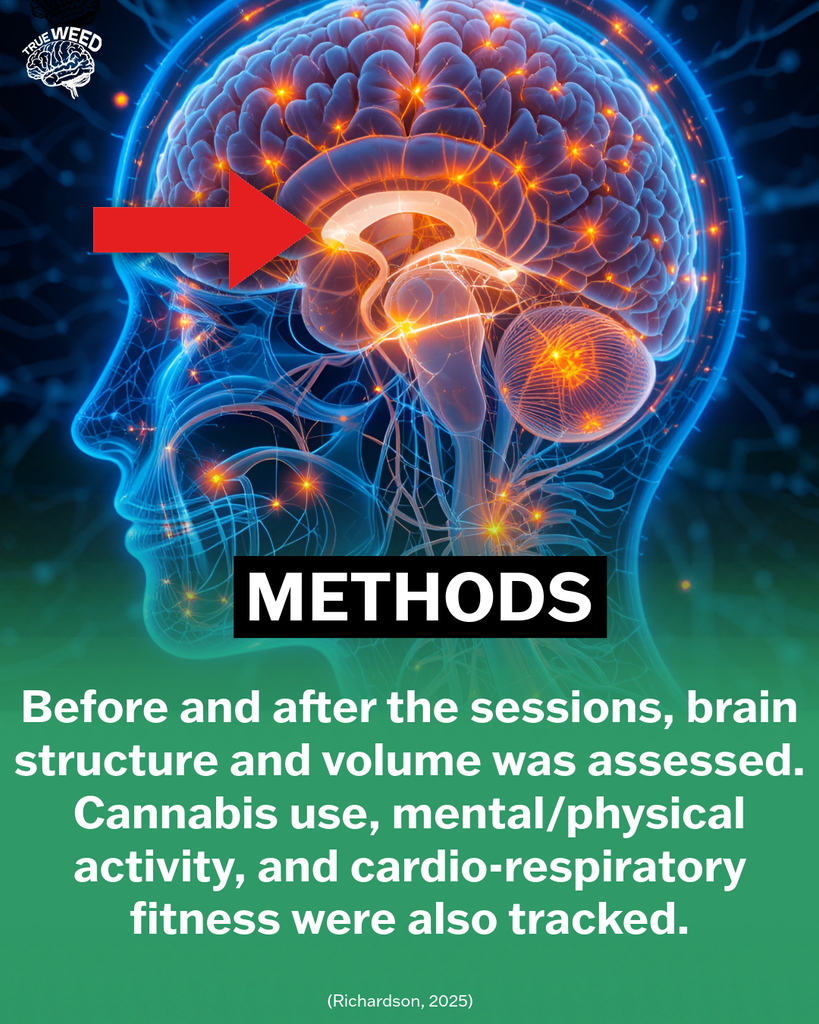
Researchers used MRI scans before and after the program to measure hippocampal integrity, including its volume, connectivity, and biochemistry. They also measured cannabis use and craving, memory, mental health, physical activity, and cardiovascular fitness.
Results: Exercise did not improve hippocampal integrity after 12 weeks. Neither HIIT nor strength and resistance training produced a statistically significant improvement in the brain measures researchers were tracking. Exercise also did not produce measurable improvements in cognition or mental health.
There was one notable positive finding: both exercise groups experienced a reduction in cannabis craving. The exercise program was also feasible, with 47 of the 59 participants completing the 12-week intervention and attending about 80% of the scheduled sessions.
Meaning:
Exercise didn’t repair the hippocampus in people with CUD, at least not over 12 weeks while they continued using cannabis.
That doesn’t mean exercise is useless for people with CUD. The study suggests that people with CUD can successfully participate in demanding exercise programs, and both types of exercise reduced cannabis craving. But this study does not show that exercise can reverse cannabis-related changes in the brain, and it did not test whether stopping cannabis would improve hippocampal health.
Richardson, K. E., Suo, C., Albertella, L., Maleki, S., Coxon, J., Hendrikse, J., Hughes, S., Pitt, J., Edouard Kayayan, Brown, C., Nguyen, L., Solowij, N., Lubman, D. I., Segrave, R., & Murat Yücel. (2025). High-Intensity Exercise and Hippocampal Integrity in Adults With Cannabis Use Disorder: A Randomized Clinical Trial. JAMA Psychiatry. https://doi.org/10.1001/jamapsychiatry.2025.2319


Learn More
- Is weed a gateway drug? Does smoking weed lead to other drug use?

- Can smoking weed lead to a stroke?
- Lasting impacts of cannabis use among youth
- Association between cannabis use and maternal outcomes

- High-intensity exercise and cannabis cravings

- Doctor-recommended cannabis use in the era of legalization