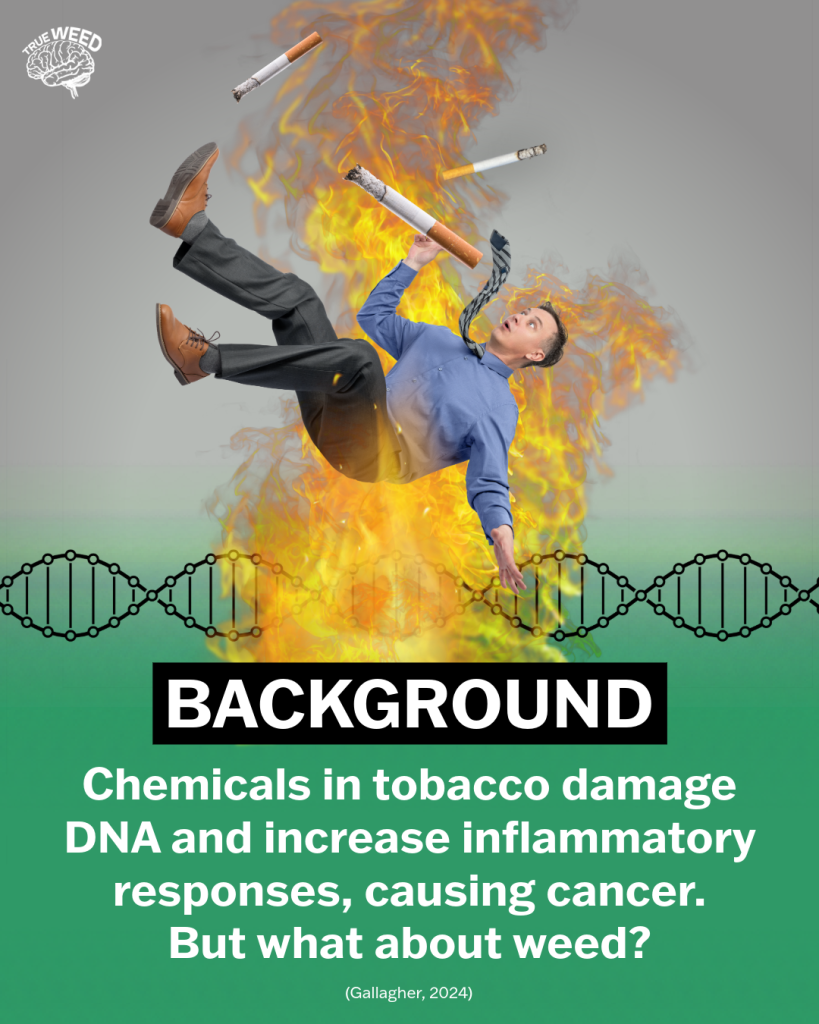
Rationale: Head and Neck Cancer (HNC) is the 6th most frequent cancer type worldwide. Tobacco consumption is a risk factor for the development of HNC (Jethwa, 2017). The cancer-inducing chemicals in tobacco can damage DNA and increase inflammatory responses.
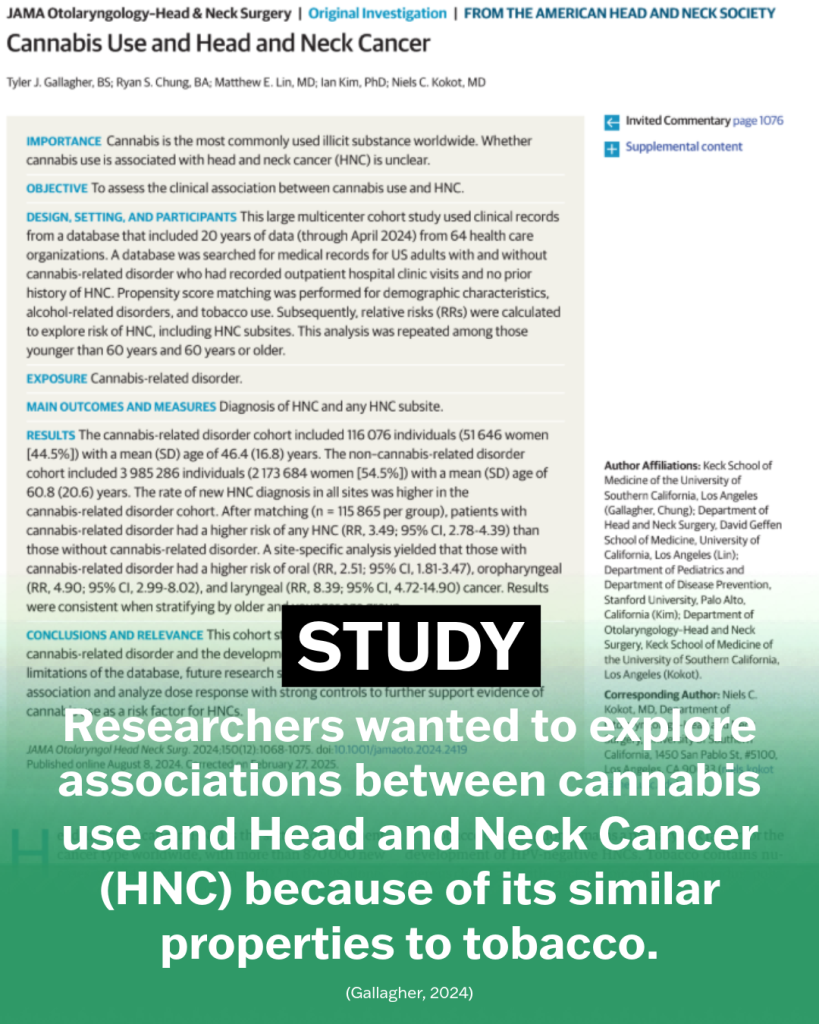
Although, prior evidence suggests that cannabis may also have an impact on HNC rates due to having similar cancerous chemicals as tobacco smoke. However, the association between cannabis use and HNC is still unclear.This study aims to explore any clinical association between cannabis use and HNC.
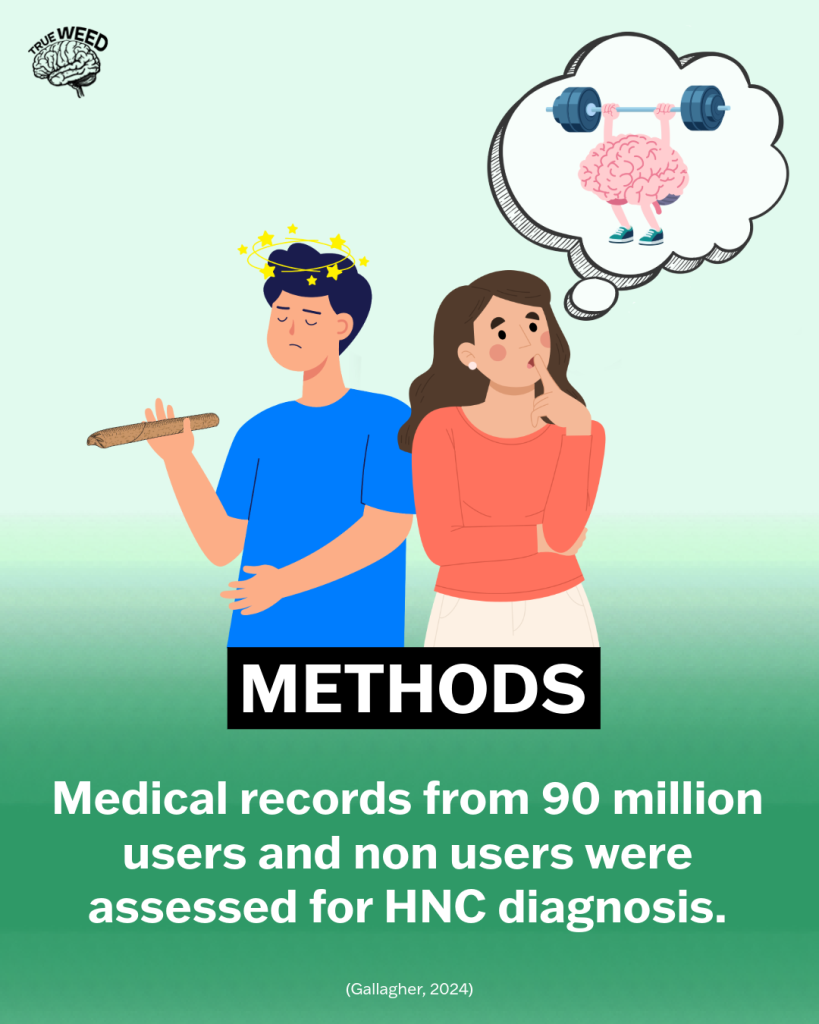
Method: Researchers collected data from 64 healthcare organizations that accounted for over 90 million individuals. Cohort 1 included individuals who were diagnosed with a cannabis related disorder, had a recorded outpatient hospital clinic visit and had no prior history of HNC. Cohort 2 included individuals who had a recorded outpatient hospital clinic visit, never were diagnosed with a cannabis use disorder, and did not have a history of HNC. The analysis was repeated twice for those under the age of 60 and over the age of 60. The development of a new HNC diagnosis was measured.
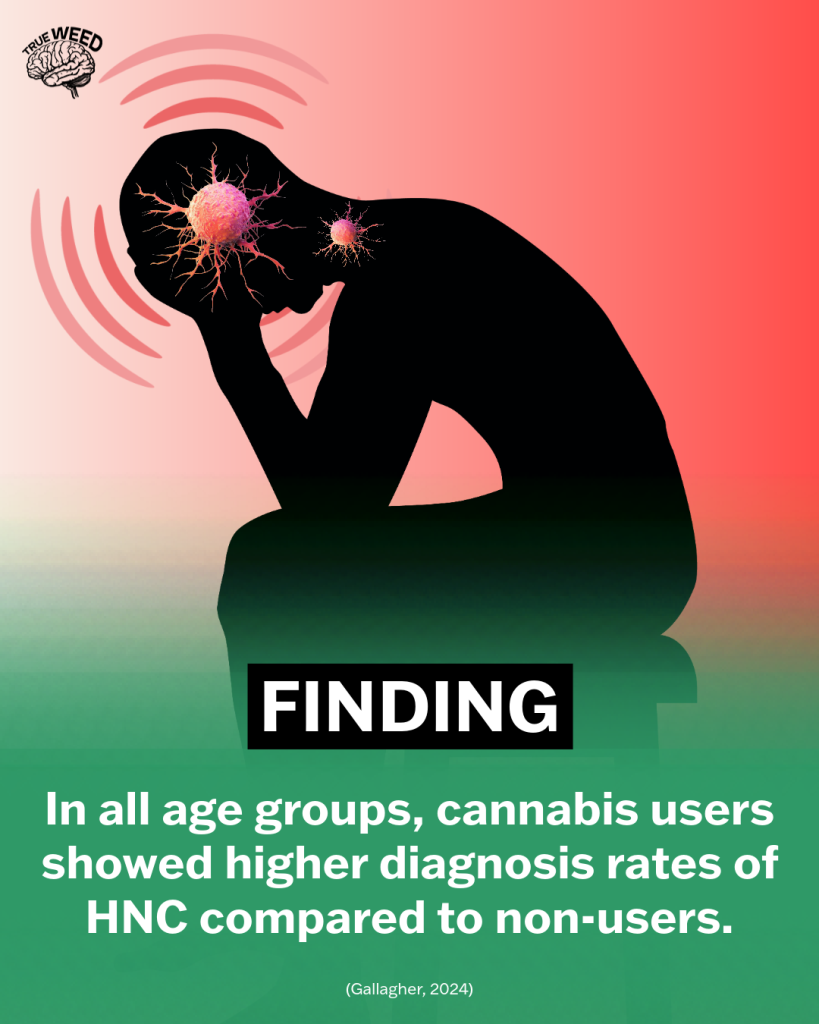
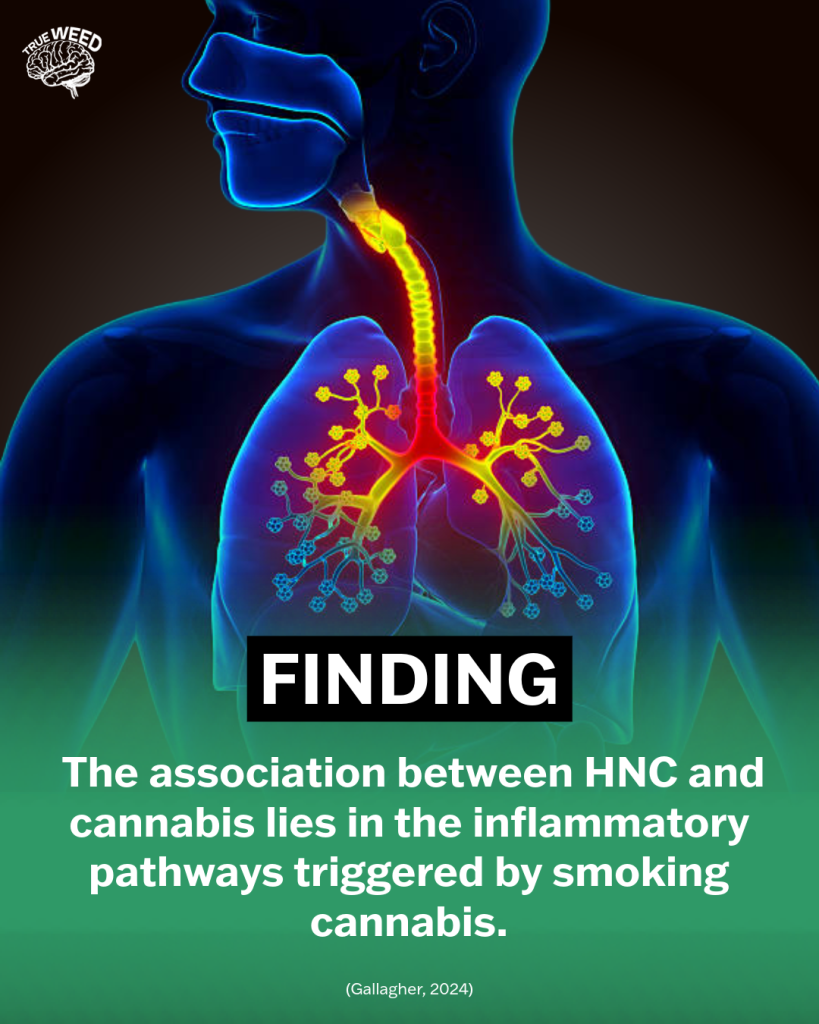
Results: The cannabis disorder group demonstrated higher rates and were at a higher risk of any HNC. Associations were consistent when considering those younger than 60 and older than 60. The clearest association lies in the inflammatory pathways as smoking is the most common method of cannabis consumption.
Meaning: Consistent cannabis use increases the likelihood of users developing head and neck cancer. Further research must be conducted to confirm this association and understand how it works.
Gallagher, T. J., Chung, R. S., Lin, M. E., Kim, I., & Kokot, N. C. (2024). Cannabis Use and Head and Neck Cancer. JAMA otolaryngology– head & neck surgery, 150(12), 1068–1075. https://doi.org/10.1001/jamaoto.2024.2419