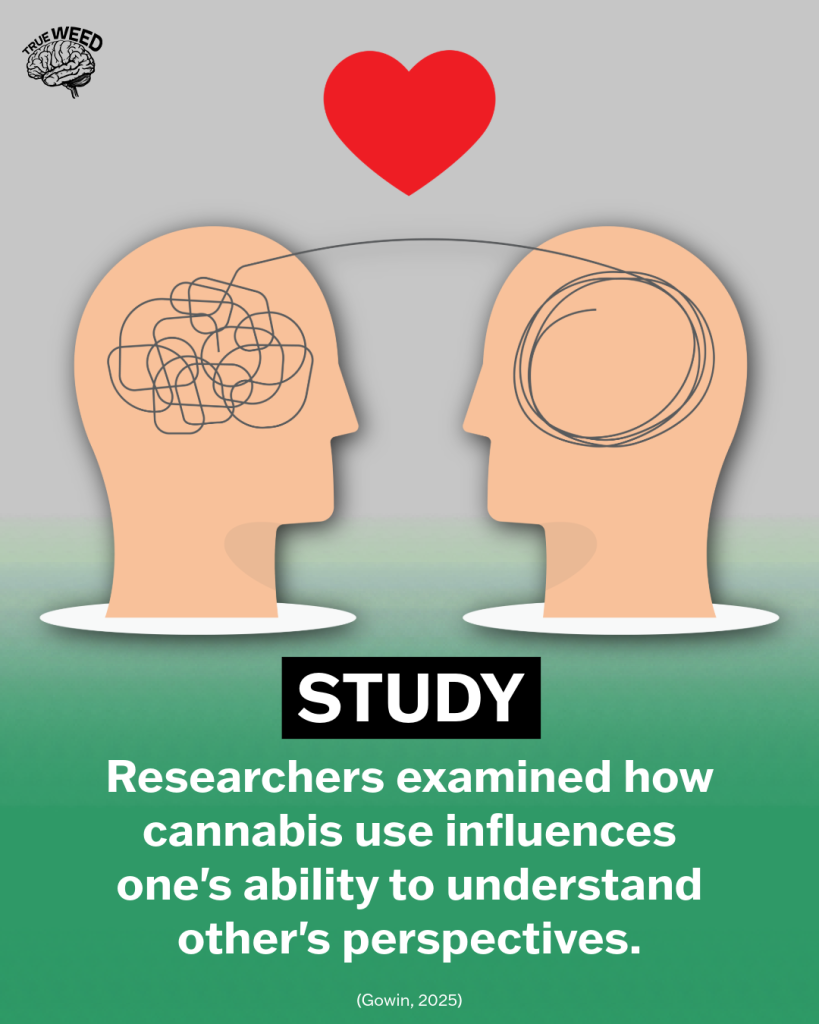
Rationale: Previous studies have shown that cannabis use reduces brain activity related to memory, executive function, emotion, reward processing, and social processing. In this study, researchers sought to understand how short-term and chronic cannabis use influences brain activity involved in maintaining social relationships, understanding other perspectives, and predicting behavior—characteristics associated with Theory of Mind (ToM).
Method: 1206 participants, between ages 22 and 37, had their brain activity measured while completing seven ToM tasks. From these data, researchers recorded areas of the brain that were active during ToM tasks and compared them in cannabis users and non-users.
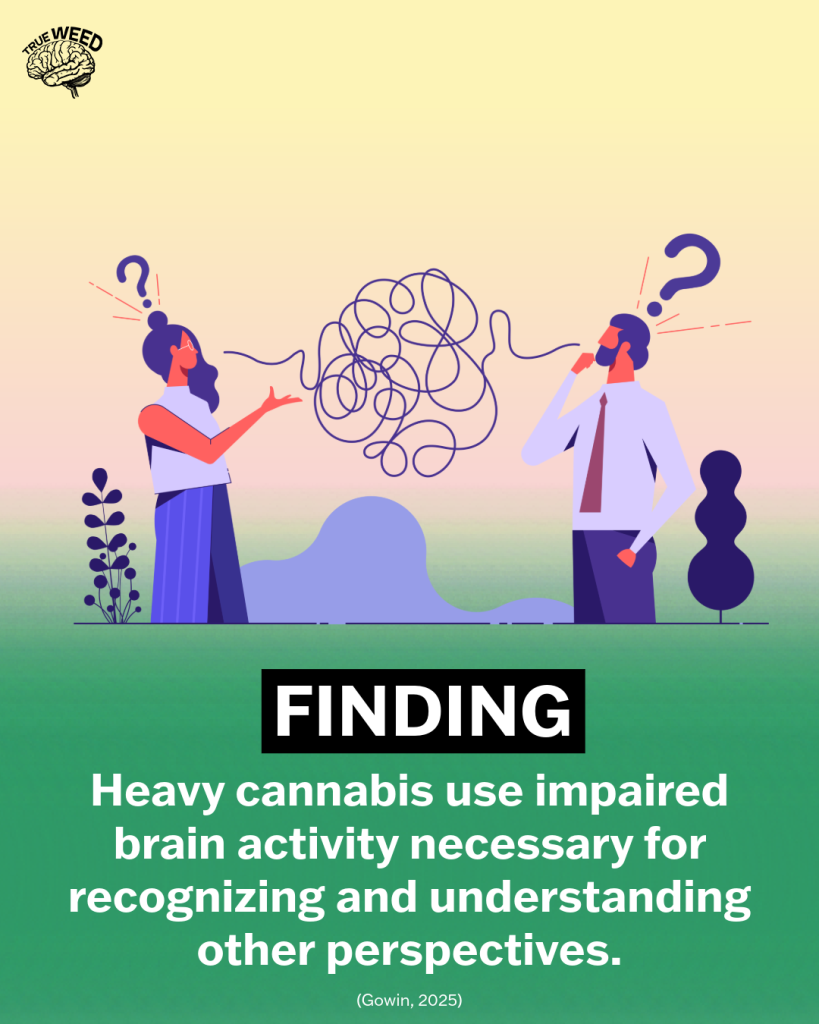
Results: Regular cannabis use reduces neural processing related to ToM. Recent cannabis use also impairs brain functioning tied to ToM.
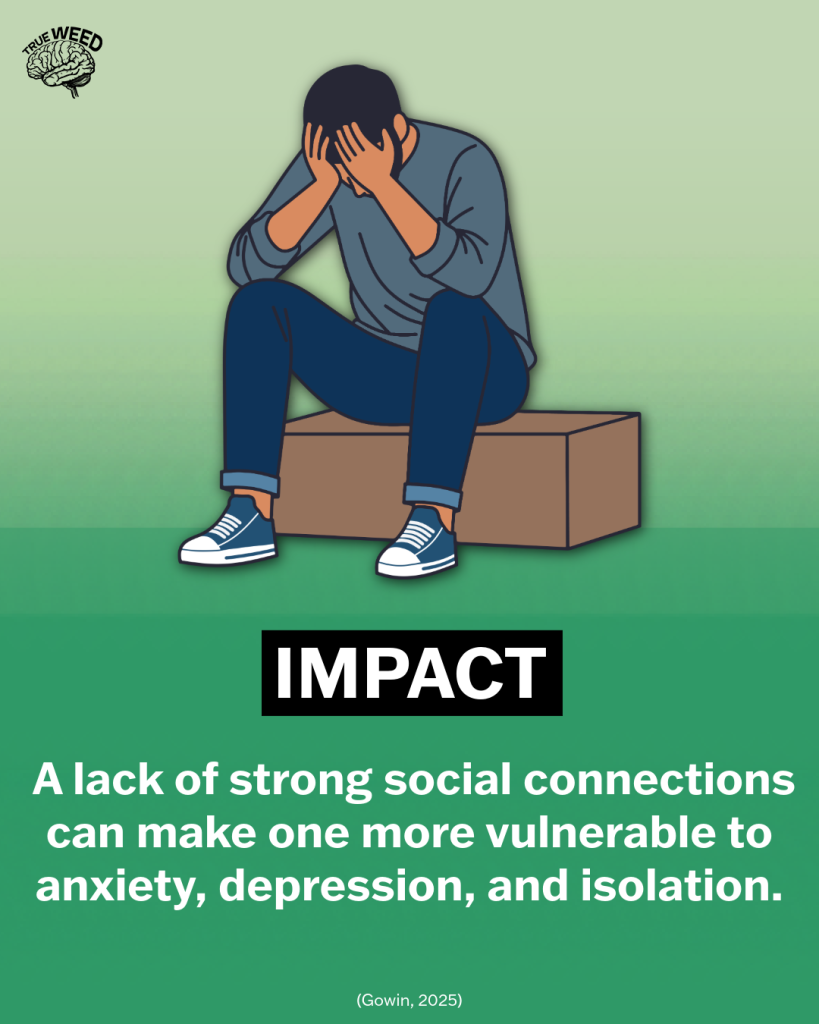
Meaning: Many people think of cannabis as a pro-social drug, but it disrupts social processing skills. Recent or long-term use dampens the brain activity necessary for understanding other perspectives. An inability to create strong social connections can lead to anxiety, depression and other mental health conditions. Strong ToM processing is critical for healthy, pro-social relationships.
Gowin JL, Ellingson JM, Karoly HC, Manza P, Ross JM, Sloan ME, Tanabe JL, Volkow ND. Brain Function Outcomes of Recent and Lifetime Cannabis Use. JAMA Netw Open. 2025 Jan 2;8(1):e2457069. doi: 10.1001/jamanetworkopen.2024.57069. PMID: 39874032; PMCID: PMC11775743.