Di Forti, M., Morgan, C., Dazzan, P., Pariante, C., Mondelli, V., Marques, T. R., Handley, R., Luzi, S., Russo, M., Paparelli, A., Butt, A., Stilo, S. A., Wiffen, B., Powell, J., & Murray, R. M. (2009). High-potency cannabis and the risk of psychosis. The British journal of psychiatry : the journal of mental science, 195(6), 488–491. https://doi.org/10.1192/bjp.bp.109.064220.
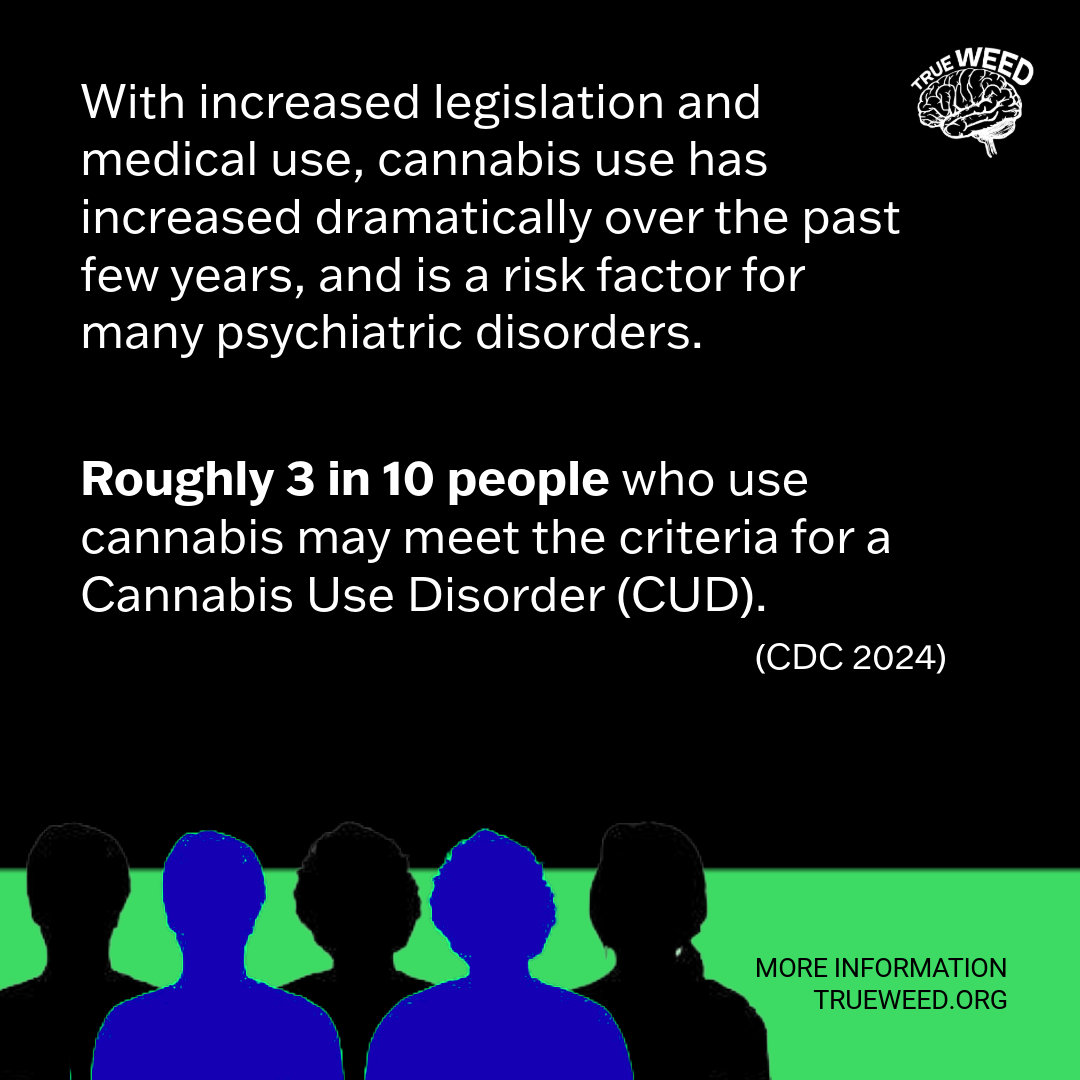
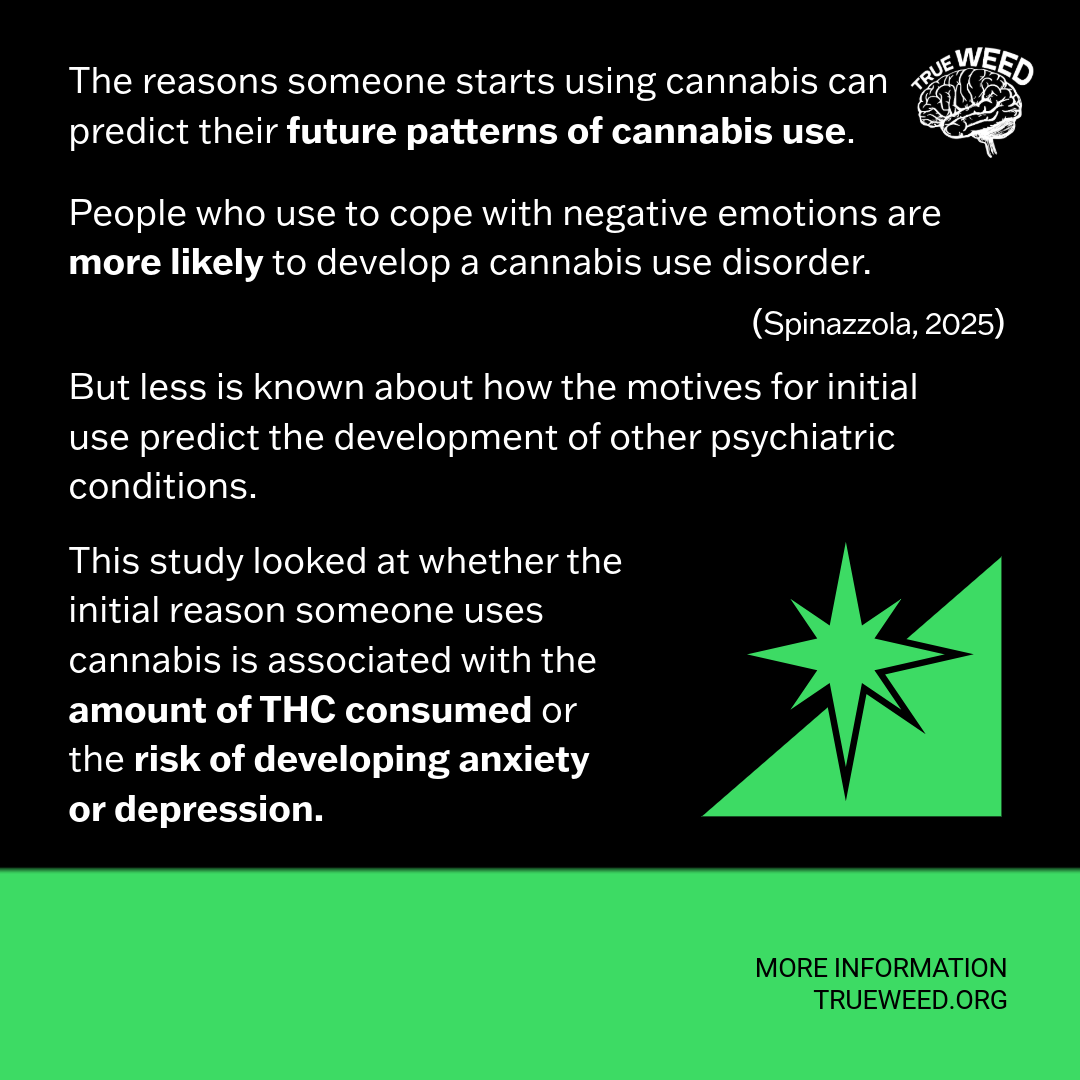
Rationale: Roughly 3 in 10 people who use cannabis meet the criteria for a Cannabis Use Disorder (CUD). The reasons someone starts using cannabis can predict their future patterns of use. This study looked at whether the initial reason someone uses cannabis is associated with the amount of THC consumed or the risk of developing anxiety or depression.
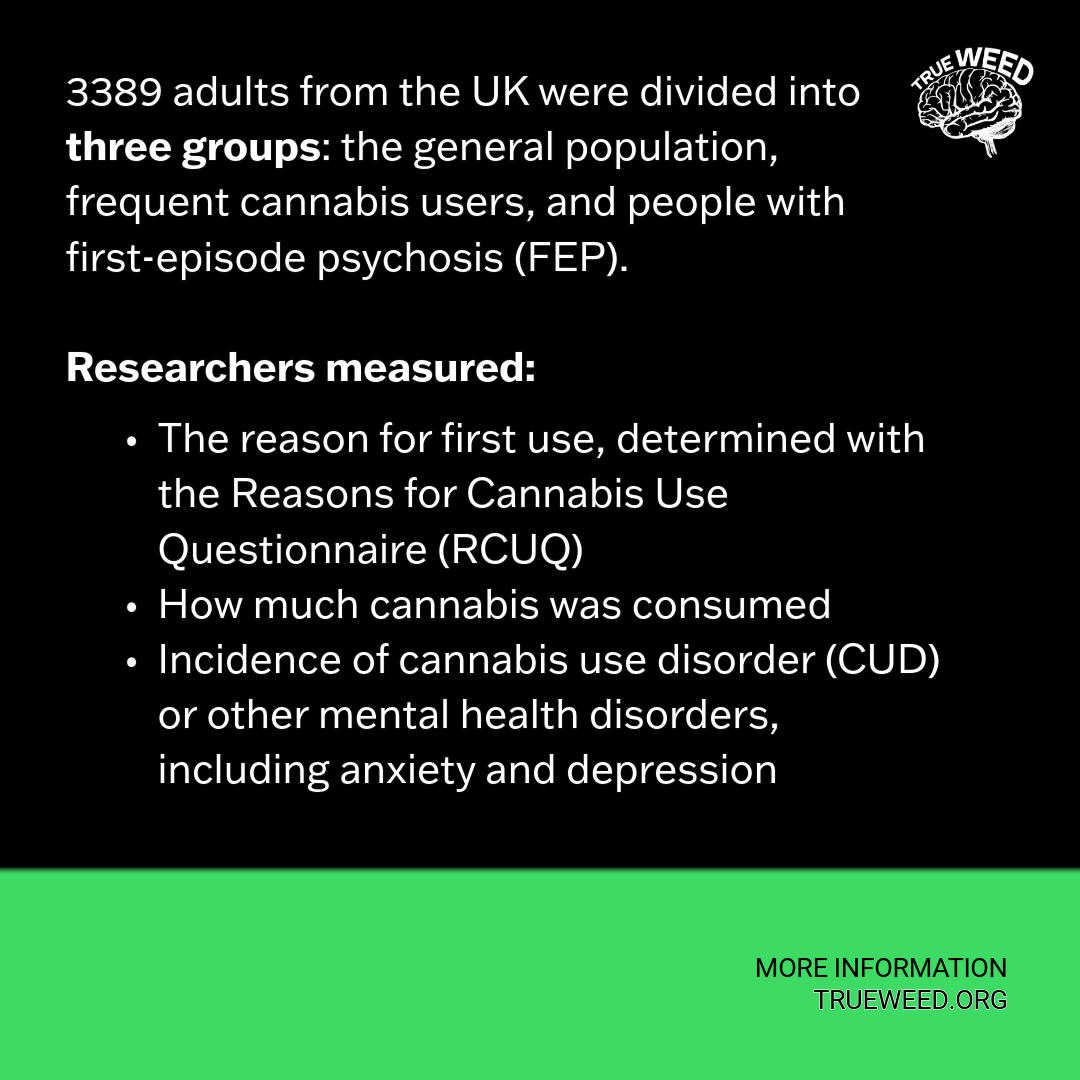
Method: 3389 adults from the UK were divided into three groups: a general population, frequent cannabis users, and people with first-episode psychosis (FEP). Researchers assessed the reason for first using cannabis with the Reasons for Cannabis Use Questionnaire (RCUQ), the amount of cannabis consumed, and the incidence of cannabis use disorder (CUD) or other mental health disorders, including anxiety and depression.
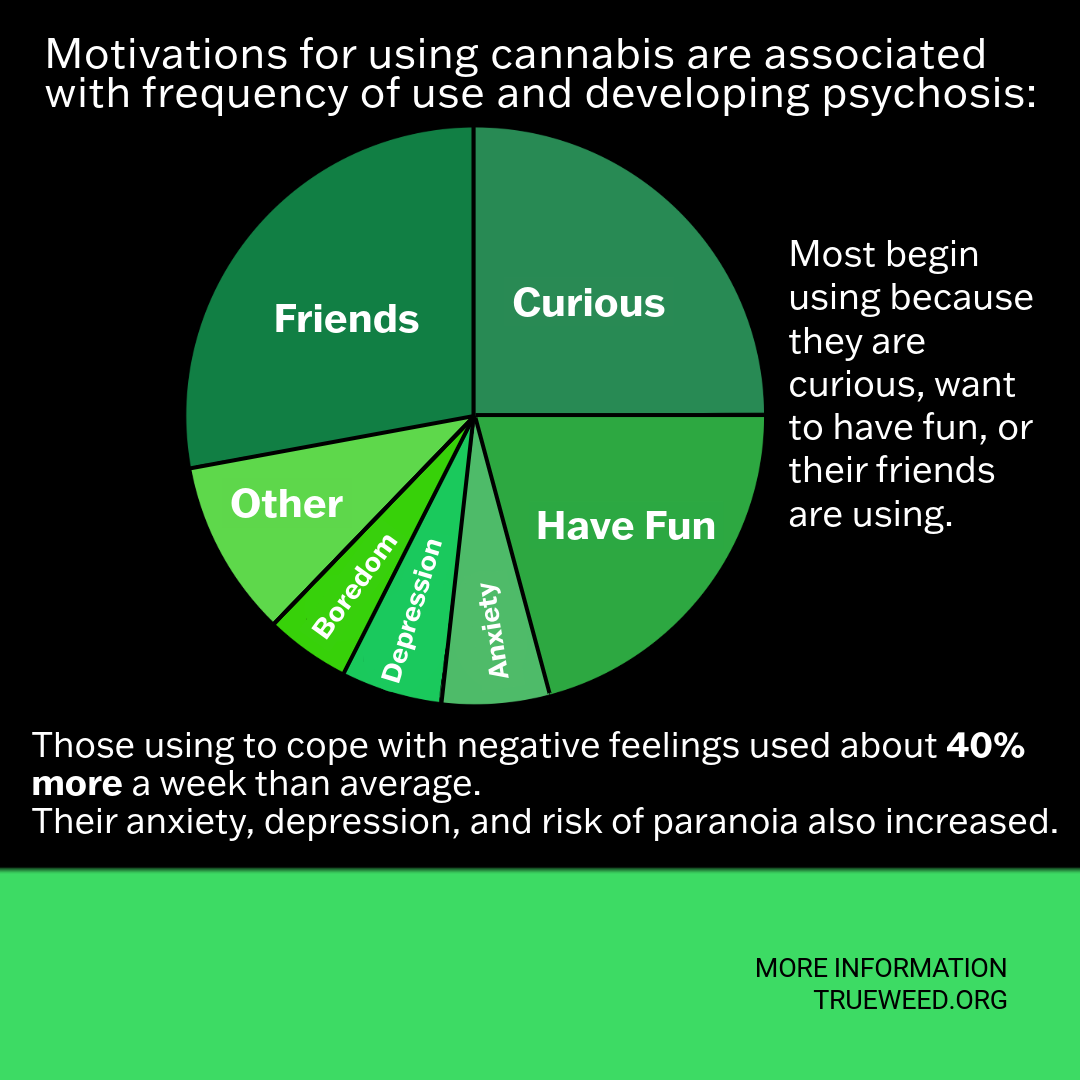
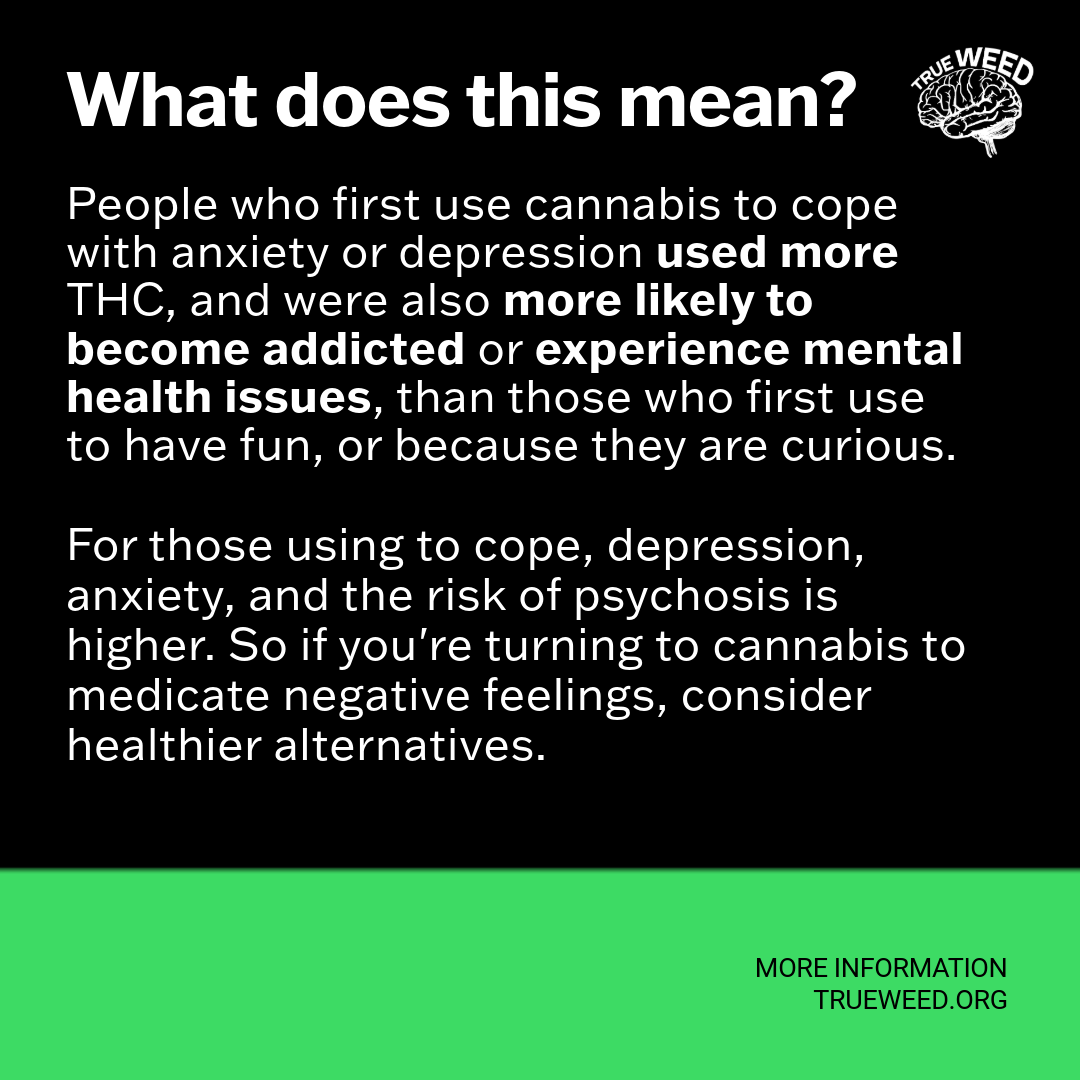
Results: Motivations for using cannabis were associated with frequency of use and risk of developing psychosis. Most people first used because they were curious, they wanted to have fun, or their friends were using it. However, people who initially used to cope with negative feelings eventually used about 40% more than average, and were more likely to be anxious, depressed, and paranoid.
Meaning: People who report first using cannabis as a way to cope with anxiety or depression used more, and were more likely to become addicted or experience mental health issues. This study provides evidence that turning to cannabis to medicate negative feelings is unlikely to help.