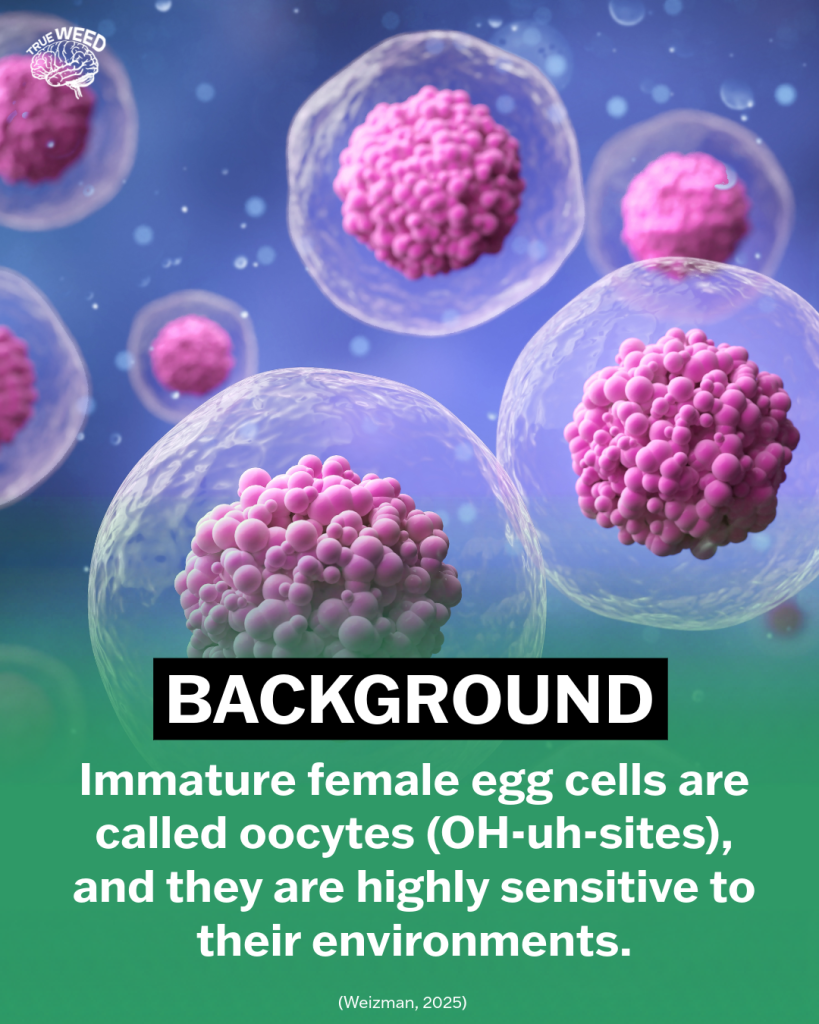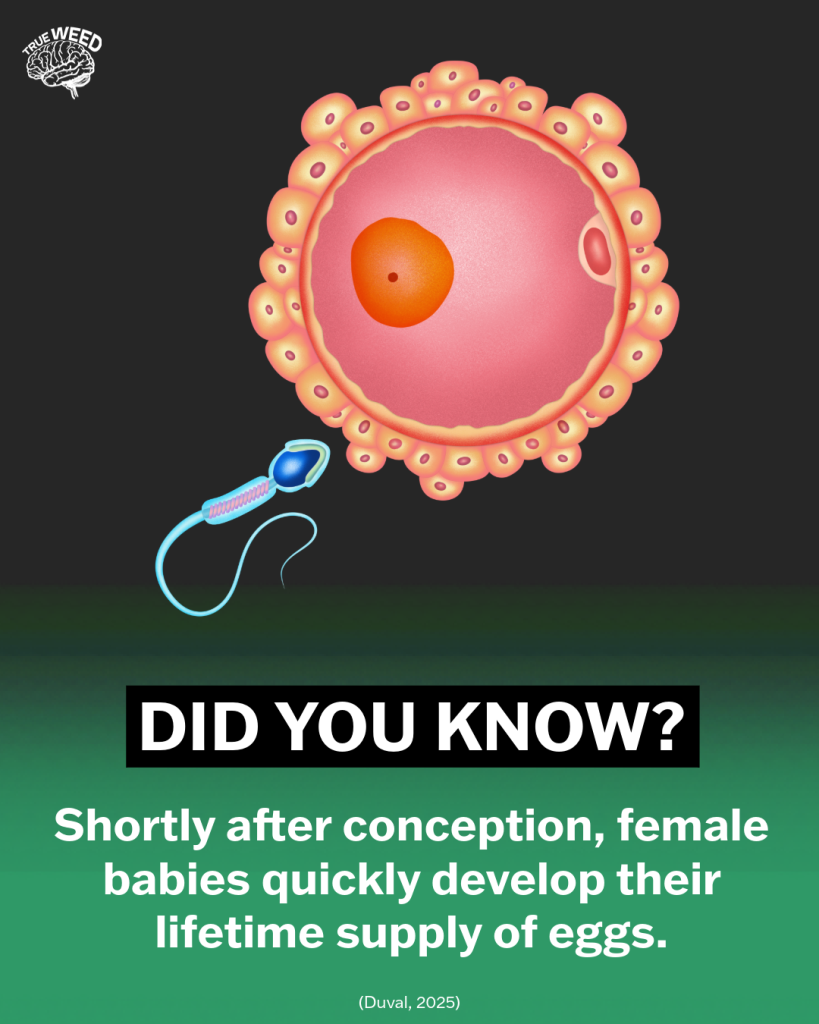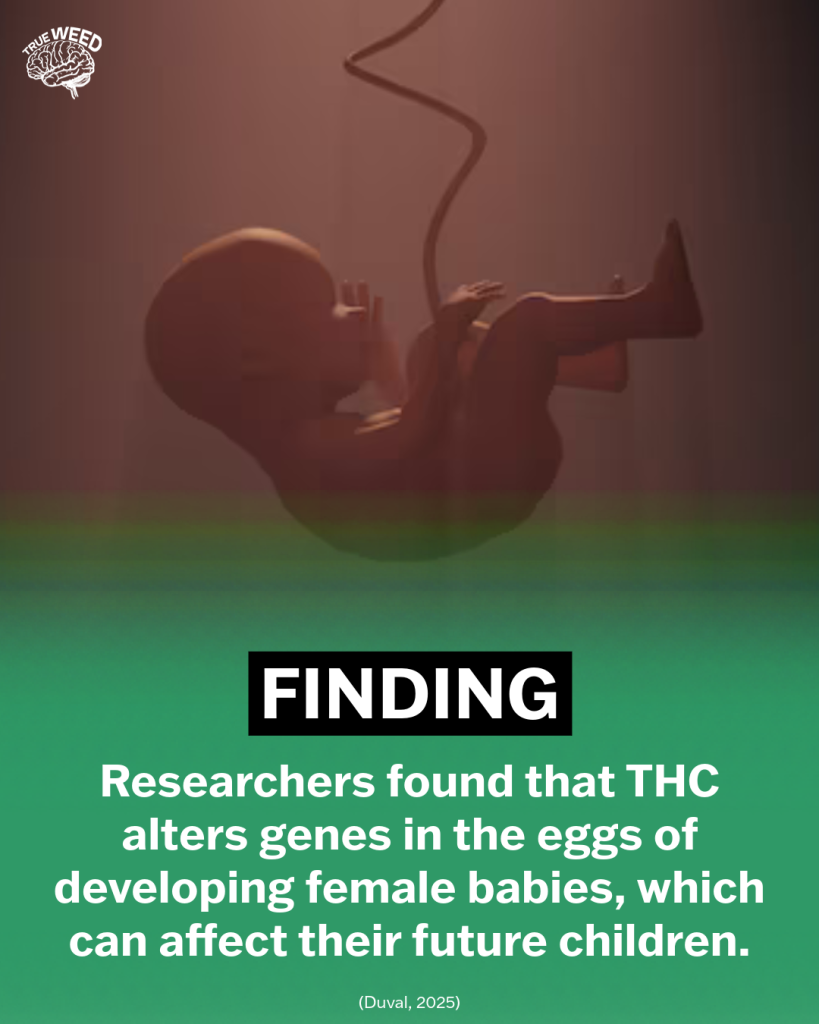
Rationale: THC products are easier to get and stronger than ever before, which raises concerns for human health, importantly reproductive health (Duveal 2025). Female babies in utero have a finite number of eggs that they will have for the rest of their lives; these eggs are highly sensitive to environmental factors. Oocytes (eggs) are highly sensitive to their environments. THC has the potential to disrupt the microenvironment of the eggs by penetrating the follicular fluid and somatic cells that they reside in before being fertilized (Weizman 2022). This suggests that if a mother uses THC, it may affect not only her eggs, but her offspring’s eggs as well
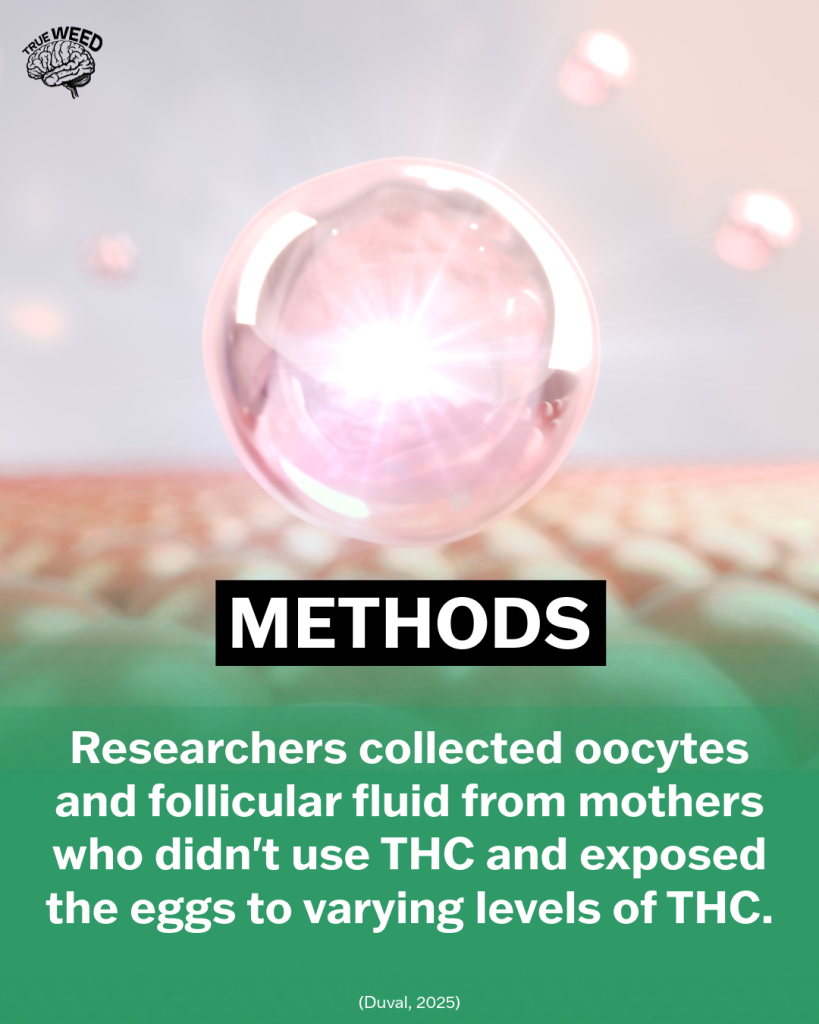
Method: This study collected immature oocytes and follicular fluid from female volunteers. Only oocyte samples with no traces of THC were used (Duval, 2025). Certain eggs were cultured with a low concentration of THC, others with a high concentration of THC, and some with no THC at all (control). Maturation in the oocytes (spindle strength and chromosomal alignment), gene expression, and the number of chromosomes and pairs were assessed.
Results: Even though researches did not include samples that were positive for THC, 6% of follicular fluid contained THC metabolites. Both low- and high-dose treated oocytes showed changes in gene expression. For example, low-dose THC turned off some genes and turned on others in oocytes. High-dose THC turned on cell death pathways and interfered with cell division machinery. It also shut down genes that regulate immune and inflammatory responses. Oocytes exposed to THC had more chromosomal errors, meaning an incorrect number of chromosomes, and the structures within the chromosomes were 50% more likely to be abnormal. Embryos exposed to THC had a higher number of chromosomes with deformities.
Meaning: THC causes important genes to be turned off or turned on too much in oocytes, which can affect development and cause structures in the cells, such as chromosomes, to be deformed. THC also caused embryos to have more deformities. Using THC alters the oocytes in females. People who want to have children should be aware of these outcomes.
Duval, C., Wyse, B. A., Fuchs Weizman, N., Kuznyetsova, I., Madjunkova, S., & Librach, C. L. (2025). Cannabis impacts female fertility as evidenced by an in vitro investigation and a case-control study. Nature Communications, 16(1), 8185. https://doi.org/10.1038/s41467-025-63011-2